

Table of Contents
- Merchant Services for Dental Practices: Feature Comparison
- How We Evaluated These Solutions
- PCI Compliance for Dental Offices: What You Need to Know
- Dental Practice Payment Processing Fees: Pricing Models Explained
- Dental Practice Management Software Integration
- High-Ticket Transaction Processing and Chargeback Management
- Which Solution Should You Choose?
- Conclusion
Last Updated: August 29, 2026
Merchant Services for Dental Practices: Feature Comparison
Merchant services for dental practices have become far more specialized in recent years. The industry has moved beyond generic payment processing to solutions built specifically for how dental offices operate: high-ticket transactions, insurance coordination, patient financing needs, and integration with practice management software. If you’re still using a standard merchant account designed for retail, you’re likely leaving money on the table and creating unnecessary friction at the front desk.
The right merchant services provider can reduce your payment processing fees by thousands of dollars annually, automate patient billing workflows, and accept every payment method your patients expect (peer-reviewed research). The wrong choice locks you into inflexible pricing models, creates integration headaches with your practice management system, and exposes you to compliance risks around PCI standards and HIPAA requirements.
This guide from Merchant Card Advisors covers the merchant services solutions specifically designed for dental practices, how to evaluate them, and what pricing models actually work for high-ticket dental procedures. We’ve analyzed the key differences between solutions so you can make an informed decision based on your practice’s size, transaction volume, and software ecosystem.
Quick Picks:
- Best Overall Consultative Approach: Merchant Card Advisors, customized solutions with transparent pricing and no rate bumps
How We Evaluated These Solutions
We assessed each merchant services provider based on criteria that matter most to dental practices: integration capabilities with popular dental practice management software like Dentrix and Eaglesoft, transparency in fee structures, ability to handle high-ticket transactions without excessive processing costs, PCI compliance and security features, and quality of customer support.
A common mistake is choosing based on advertised rates alone. Many providers quote attractive headline rates but bury additional fees in fine print. We looked beyond the marketing to understand the actual cost structure: whether they use interchange-plus pricing (transparent, variable) or flat-rate pricing (predictable, but often higher for dental practices), what hidden fees exist, and whether the provider actually delivers on promises around cost savings.
We also prioritized solutions that integrate directly with your existing practice management software rather than requiring manual reconciliation. The difference between automated payment posting and manual data entry can mean hours of administrative work per week.
PCI Compliance for Dental Offices: What You Need to Know
PCI compliance for dental offices isn’t optional, it’s a legal requirement whenever you accept credit card payments. The Payment Card Industry Data Security Standard (PCI DSS) sets specific requirements for how you store, process, and transmit payment card data. Failure to maintain compliance can result in fines from card networks, liability for data breaches, and loss of your merchant account (pcisecuritystandards.org).
Most modern merchant services providers handle the heavy lifting of PCI compliance through tokenization and end-to-end encryption. Tokenization replaces sensitive card data with a unique identifier, so your systems never actually store full card numbers. End-to-end encryption scrambles payment data from the moment it enters your payment terminal until it reaches the processor’s secure servers.
What you need to verify: Does your merchant services provider offer PCI-compliant payment terminals? Do they provide annual PCI compliance training for your staff? Are they willing to sign a Business Associate Agreement (BAA) if required by your practice‘s data handling protocols? Some solutions are specifically designed to meet HIPAA and PCI requirements simultaneously, important if you handle both payment data and protected health information in the same systems.
The real risk in dental practices comes from outdated payment terminals or manual card entry. If your practice is still swiping cards or hand-writing card numbers, you’re creating unnecessary compliance exposure. Modern contactless and chip-enabled terminals shift liability to the card issuer if fraud occurs, protecting your practice under EMV (Europay, MasterCard, Visa) liability standards.
Dental Practice Payment Processing Fees: Pricing Models Explained

Dental practices typically encounter three pricing models for merchant services: interchange-plus, flat-rate, and tiered pricing. Each model works differently, and the right choice depends on your transaction volume and average ticket size.
Interchange-plus pricing is the most transparent model. You pay the actual interchange rate (set by Visa and Mastercard, typically 1.5-2.5% for dental practices) plus a processor markup (usually 0.3-0.5%) (visa.com). The advantage: as interchange rates change, you see exactly what you’re paying. The disadvantage: rates fluctuate monthly. This model works best for practices with high transaction volumes, where small percentage savings compound significantly.
Flat-rate pricing charges a single percentage (typically 2.6-3.08%) on every transaction regardless of card type. Predictability is the main appeal, you know exactly what you’ll pay. The catch: flat rates are usually higher than the combined interchange-plus fees for dental practices, which tend to process a lot of premium credit cards with higher interchange costs. Over a year, flat-rate pricing can cost thousands more than interchange-plus for a typical dental practice.
Tiered pricing divides cards into categories (qualified, mid-qualified, non-qualified) with different rates for each. This model is less common now and generally disfavored because it creates hidden costs, you don’t know which tier your patients’ cards will fall into until the transaction processes.
What most guides miss: dental practices have unique fee exposure. High-ticket procedures mean fewer transactions but larger dollar amounts, which changes the fee math. A 0.1% difference in processing rates translates to hundreds of dollars per month on a $50,000 transaction. Additionally, many dental practices accept insurance cards and HSA/FSA cards, which carry different interchange rates than consumer credit cards.
Merchant Card Advisors specializes in helping practices analyze their actual transaction patterns to identify which pricing model saves the most money. The team reviews your current processing statements to show exactly where hidden fees are occurring, something most practices never actually see.
Dental Practice Management Software Integration
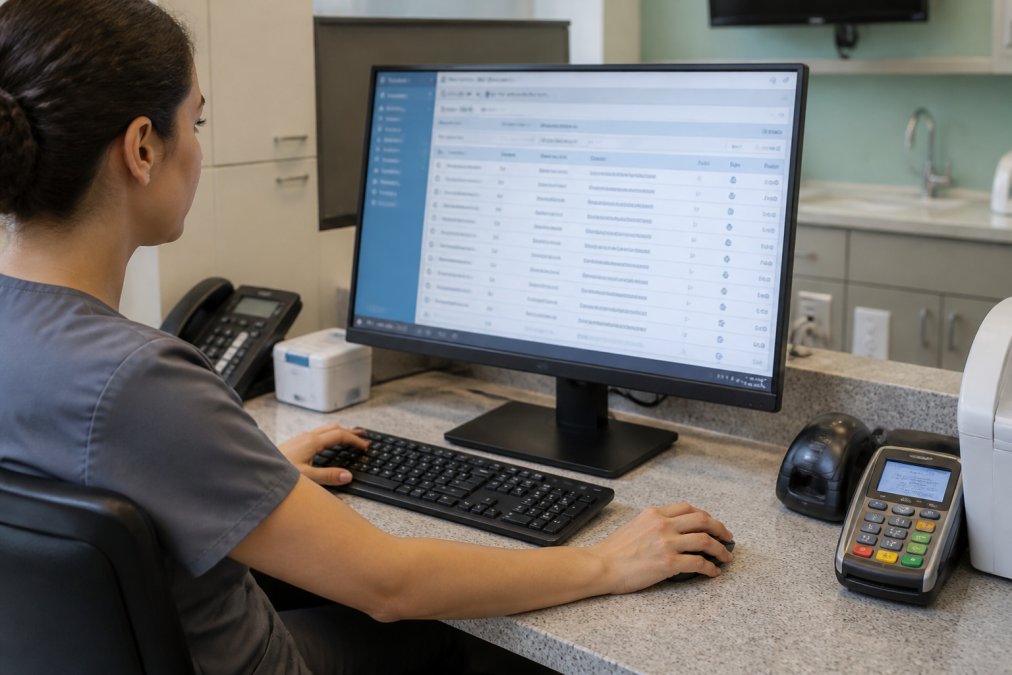
The best merchant services for dental practices integrate directly with your practice management software. Without integration, you’re manually entering payment data into two separate systems, creating errors, duplicating work, and delaying patient billing reconciliation.
Popular dental practice management platforms include Dentrix, Eaglesoft, Dolphin Management, and Fuse. Each has different API capabilities and integration depth. Some solutions offer real-time posting of payments directly into patient accounts; others require batch file uploads at end of day.
What matters most: automated payment posting. When a patient pays at the front desk, the payment should post automatically to their account balance in your practice management system without manual data entry. This eliminates reconciliation errors and frees your front-desk staff from administrative busywork.
The integration question also affects your ability to offer online patient payments. Some solutions include patient payment portals that allow patients to pay invoices online, and payments post automatically to their accounts. This dramatically improves cash flow, as patients can pay immediately after treatment rather than waiting for an invoice to arrive.
High-Ticket Transaction Processing and Chargeback Management
Dental practices process some of the highest-ticket transactions in small business. A single implant procedure, full-mouth restoration, or complex orthodontic treatment can easily exceed $5,000 or $10,000. This creates unique processing challenges and financial risks that standard merchant services don’t address well.
The primary risk is chargebacks. A chargeback occurs when a patient disputes a charge with their credit card issuer, and the card network reverses the transaction. For high-ticket dental work, chargebacks are particularly problematic because the patient has already received the service. Unlike retail refunds, you can’t simply return the product. If a patient claims they didn’t authorize a $8,000 implant procedure, you’re in a difficult position.
Chargeback protection isn’t something every merchant services provider emphasizes, but it’s critical for dental practices. Some providers offer chargeback management tools and detailed transaction documentation requirements that help you defend against disputes. The key is maintaining clear records: signed consent forms, pre-treatment estimates, photographic documentation of work completed, and itemized invoices.
EMV compliance also matters here. If you process transactions on a non-EMV-compliant terminal and a chargeback occurs, liability shifts to you rather than the card issuer. Modern EMV chip readers and contactless terminals protect your practice by shifting liability to the card issuer if fraud occurs.
Patient financing through solutions like CareCredit changes the chargeback dynamic. When patients finance treatment through a third-party lender, the lender assumes the credit risk. You receive payment immediately from the lender, and the patient makes payments to the lender rather than your practice. This eliminates chargebacks on financed procedures.
Which Solution Should You Choose?
The best merchant services for dental practices depends on your specific situation. Here’s how to think about it:
Choose Merchant Card Advisors if: You want a consultative partner who analyzes your actual processing statements to identify hidden fees and cost-saving opportunities. The team specializes in working with practices in specialized industries and takes a boutique approach to customized solutions. No rate bumps, transparent pricing, and 24/7 personalized support mean you’re working with a partner who understands your business, not a faceless processor.
Conclusion
Merchant services for dental practices have evolved into specialized solutions that address the unique challenges of dental billing: high-ticket transactions, insurance coordination, patient financing, and integration with practice management software. The difference between a generic merchant account and a dental-specific solution can easily be thousands of dollars per year in processing fees, plus significant time savings through automated payment posting.
The biggest mistake practices make is choosing based on advertised rates alone. A 2.9% plus interchange quote sounds reasonable until you analyze your actual statement and discover hidden fees pushing your effective rate to 3.5% or higher. Transparent pricing models, direct software integration, and chargeback protection matter far more than headline rates.
Merchant Card Advisors helps dental practices optimize their payment processing by analyzing actual transaction patterns, identifying hidden fees, and implementing solutions tailored to your specific practice size and patient mix. With a consultative approach, transparent pricing with no rate bumps, and 24/7 personalized support, you get a partner invested in your success, not just another processor. Get started with Merchant Card Advisors today and discover how much you could save on payment processing fees while simplifying your billing workflow.
=== FAQ ANSWERS (audit these too, same rules) ===
[1] Q: What is the difference between flat-rate and interchange-plus pricing for merchant services in dental practices?A: Flat-rate pricing charges a single percentage fee per transaction (typically 2.6-3.08%), making costs predictable but potentially higher for high-ticket procedures. Interchange-plus pricing charges the actual interchange fee set by card networks plus a markup, which can be lower for large transactions but fluctuates monthly. Dental practices processing high-value treatments often save more with interchange-plus, while practices with lower transaction volumes may prefer flat-rate simplicity. [2] Q: Are there specific PCI compliance requirements for dental offices?
A: Yes. Dental offices that accept credit cards must comply with the Payment Card Industry Data Security Standard (PCI DSS), regardless of transaction volume. Requirements include secure payment terminals, end-to-end encryption, tokenization of patient payment data, and regular security audits. Many merchant service providers handle PCI compliance on the backend, but practices remain responsible for maintaining secure systems and staff training. HIPAA also applies to dental practices, requiring additional protections for patient health information alongside payment data. [3] Q: How do merchant service fees impact dental practice profitability?
A: Processing fees directly reduce revenue from patient payments. A practice processing $500,000 annually in credit cards at 2.9% plus interchange loses roughly $15,000-$20,000 yearly to fees. Hidden fees, such as batch fees, statement fees, or PCI compliance charges, can add another 0.5-1% to costs. Analyzing your current processor’s statement and comparing interchange-plus rates against flat-rate options can reveal savings of 4-8%, translating to thousands of dollars annually that flow back to practice profitability. [4] Q: Can dental practice management software integrate with payment processors?
A: Most modern payment processors integrate with popular dental practice management software like Dentrix, Eaglesoft, Dolphin, and Fuse. Integration automates payment posting directly into patient ledgers, eliminating manual reconciliation and reducing billing errors. However, older or custom POS systems may require manual reconciliation or workarounds. Before selecting a merchant service provider, confirm that your specific practice management software is supported through their API or direct integration.
Frequently Asked Questions
What is the difference between flat-rate and interchange-plus pricing for merchant services in dental practices?
Flat-rate pricing charges a single percentage fee per transaction (typically 2.6-3.08%), making costs predictable but potentially higher for high-ticket procedures. Interchange-plus pricing charges the actual interchange fee set by card networks plus a markup, which can be lower for large transactions but fluctuates monthly. Dental practices processing high-value treatments often save more with interchange-plus, while practices with lower transaction volumes may prefer flat-rate simplicity.
Are there specific PCI compliance requirements for dental offices?
Yes. Dental offices that accept credit cards must comply with the Payment Card Industry Data Security Standard (PCI DSS), regardless of transaction volume. Requirements include secure payment terminals, end-to-end encryption, tokenization of patient payment data, and regular security audits. Many merchant service providers handle PCI compliance on the backend, but practices remain responsible for maintaining secure systems and staff training. HIPAA also applies to dental practices, requiring additional protections for patient health information alongside payment data.
How do merchant service fees impact dental practice profitability?
Processing fees directly reduce revenue from patient payments. A practice processing $500,000 annually in credit cards at 2.9% plus interchange loses roughly $15,000-$20,000 yearly to fees. Hidden fees, such as batch fees, statement fees, or PCI compliance charges, can add another 0.5-1% to costs. Analyzing your current processor's statement and comparing interchange-plus rates against flat-rate options can reveal savings of 4-8%, translating to thousands of dollars annually that flow back to practice profitability.
Can dental practice management software integrate with payment processors?
Most modern payment processors integrate with popular dental practice management software like Dentrix, Eaglesoft, Dolphin, and Fuse. Integration automates payment posting directly into patient ledgers, eliminating manual reconciliation and reducing billing errors. However, older or custom POS systems may require manual reconciliation or workarounds. Before selecting a merchant service provider, confirm that your specific practice management software is supported through their API or direct integration.
The right merchant services provider becomes a genuine partner in your practice’s financial health. Take time to analyze your current processing statements, understand your transaction patterns, and evaluate solutions based on integration capabilities and total cost of ownership, not just advertised rates. Your practice’s profitability depends on it.
This article was written using GrandRanker


