

Table of Contents
- How to Avoid Credit Card Fraud: Monitor Your Account Activity
- Secure Online Shopping and Phishing Awareness
- Protecting Your Physical Card from Skimming and Theft
- How to Identify Fraudulent Credit Card Transactions
- Credit Card Fraud Prevention for Small Business
- Chargeback Management Best Practices
- PCI DSS Compliance Requirements for Merchants
- Conclusion
Last Updated: August 22, 2026
Credit card fraud is one of the fastest-growing financial crimes affecting both consumers and businesses. This guide covers the modern threat landscape, from skimming devices to phishing attacks, and gives you a concrete playbook to protect yourself and your customers.
The real threat in 2026 is digital-first and increasingly sophisticated, targeting gaps in account monitoring, authentication habits, and card-present transaction security simultaneously.
How to Avoid Credit Card Fraud: Monitor Your Account Activity
Consistent account monitoring is the single most effective habit for catching credit card fraud early. Most unauthorized transactions are small test charges, often under a few dollars, designed to verify a card is active before larger purchases follow.
Set Up Real-Time Transaction Alerts
Most card issuers allow cardholders to configure push notifications or SMS alerts for every transaction. Set the threshold as low as possible, ideally alerting you to any charge regardless of amount. Real-time alerts mean you can dispute suspicious activity within hours rather than weeks.
A common mistake is setting alerts only for large transactions. Fraudsters deliberately start small.
Set a separate alert for international transactions. If you’re not traveling and a charge appears from overseas, that’s an immediate red flag worth reporting to your card issuer.
Review Your Credit Report Regularly
Your credit report is a broader view of your financial identity than your card statements alone. Identity theft often precedes credit card fraud: a stolen Social Security number can be used to open new accounts entirely.
According to the Federal Trade Commission’s consumer guidance on credit reports, every consumer is entitled to a free credit report from each of the three major bureaus annually through AnnualCreditReport.com. Review each one for accounts you don’t recognize, hard inquiries you didn’t authorize, or addresses you’ve never lived at.
Secure Online Shopping and Phishing Awareness
Online card-not-present transactions are the dominant fraud vector today. The absence of a physical card, chip reader, or PIN means the security burden shifts entirely to authentication and awareness.
Recognize Social Engineering Tactics
Phishing now includes SMS smishing attacks, fraudulent phone calls impersonating your card issuer, and fake login pages that mirror legitimate banking portals. The tell is almost always urgency: "Your account has been suspended," "Verify your information now or lose access."
Legitimate financial institutions do not ask for your full card number, security code, or PIN over email or text. If you receive such a message, call the number on the back of your card directly rather than clicking any link.
Never enter your card details on a site that doesn’t use HTTPS encryption. Look for the padlock icon in the browser address bar before submitting any payment information.
Virtual Card Numbers, Mobile Wallets, and Tokenization
Virtual card numbers are single-use or merchant-locked card numbers generated by your card issuer or a third-party service. When you shop online, you use the virtual number instead of your real card number. If that merchant suffers a data breach, the compromised number is useless because it’s tied only to that merchant or transaction.
Mobile wallets like Apple Pay and Google Pay use tokenization. Your real card number is never transmitted during a transaction. Instead, the payment terminal receives a one-time token that represents your card. Even if a skimmer device were attached to a contactless terminal, the intercepted token would be worthless for any future transaction.
For cardholders who shop frequently online or in environments with unfamiliar terminals, mobile wallet adoption is one of the most underrated fraud prevention steps available.
The Consumer Financial Protection Bureau’s overview of digital payment security
Protecting Your Physical Card from Skimming and Theft
Card skimming remains a real threat despite the shift to chip and contactless payments. Skimming devices are attached to ATMs, gas pumps, and unattended payment kiosks, capturing magnetic stripe data from cards that are swiped rather than inserted or tapped.
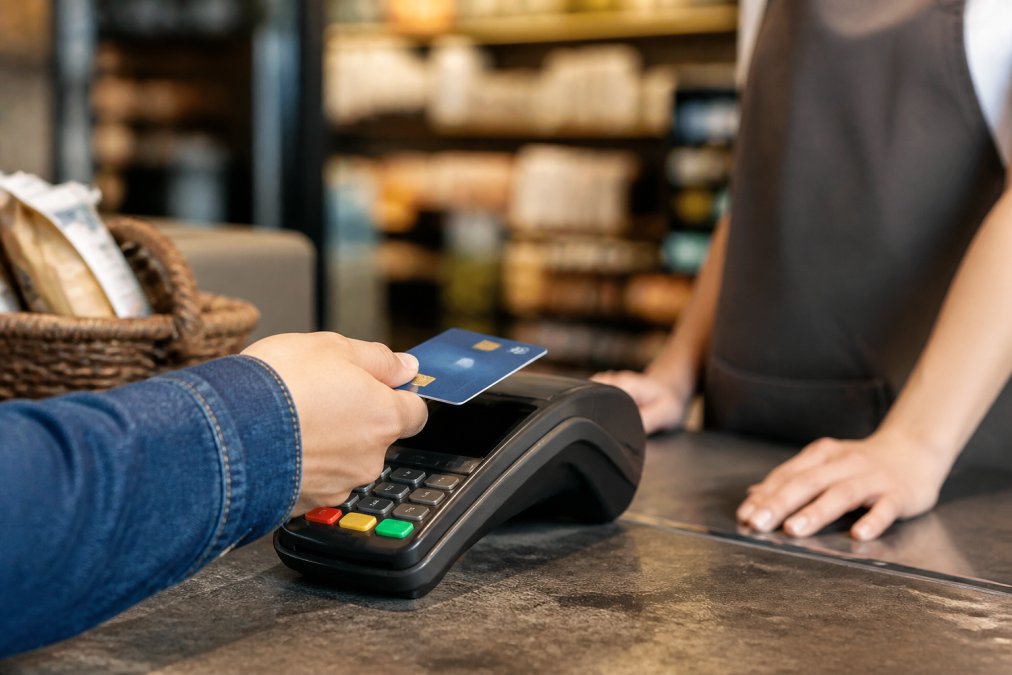
The practical defense is straightforward: prefer chip or contactless payments over swipe whenever possible. At gas stations, use pumps closest to the attendant booth. Before inserting your card anywhere, give the reader a firm tug. Legitimate readers are bolted in place; a skimmer overlay will wobble or come free.
For your physical card:
- Never let your card out of sight during a transaction
- Shield your PIN when entering it at any keypad
- Report a lost or stolen card immediately
- Don’t carry more cards than you need
How to Identify Fraudulent Credit Card Transactions
Fraudulent transactions follow recognizable patterns: charges from unfamiliar merchants, duplicate transactions for the same amount, charges from geographic locations inconsistent with your recent activity, and small test charges followed by larger purchases.
Red Flags in Card-Not-Present Orders
For business owners processing online orders, card-not-present fraud carries specific signals. Orders that warrant closer review typically share several characteristics:
- Shipping address differs significantly from the billing address
- Multiple orders placed in rapid succession using different cards but the same shipping address
- High-value orders from new customers with no transaction history
- Requests to rush shipping
- Email addresses that appear randomly generated
A single red flag is not proof of fraud. A cluster of them is. Many businesses find that flagging orders hitting two or more criteria for manual review catches the majority of fraudulent orders without creating excessive friction for legitimate customers. shop online safely.
Credit Card Fraud Prevention for Small Business
Small business owners face a different risk profile than individual cardholders. You’re responsible not just for your own card security but for the security of every transaction your customers run through your system.

Credit card fraud prevention for small businesses starts with your payment infrastructure. Work with a processor that offers end-to-end encryption and fraud screening tools as standard features. Businesses in high-risk sectors, including subscription services, CBD, and e-commerce, face elevated chargeback and fraud rates and need processors with specific experience in those categories.
Strong Passwords, Two-Factor Authentication, and Biometric Sign-In
Access to your payment portal, merchant account dashboard, and banking systems should be protected by multi-factor authentication at minimum. A strong password alone is insufficient; credential stuffing attacks use leaked username-password combinations from unrelated data breaches to gain access to financial accounts.
Enable two-factor authentication on every system that touches payment data. Where biometric sign-in is available, use it. Staff access should follow the principle of least privilege: each employee should have access only to the systems and data their role requires.
Zero-Liability Protection and Fraud Alerts Explained
Zero-liability protection is a policy offered by most major card networks that protects cardholders from financial responsibility for unauthorized transactions, provided the fraud is reported promptly. The specific terms vary by card issuer.
Fraud alerts are notifications placed on your credit file that require lenders to take extra verification steps before opening new credit in your name. A standard fraud alert lasts one year and is free. An extended fraud alert lasts seven years and is available to confirmed identity theft victims. A credit freeze prevents new accounts from being opened entirely until you lift it.
According to the FTC’s identity theft resources, placing a fraud alert is free and takes only a few minutes online or by phone.
Zero-liability protection covers you after fraud occurs. Fraud alerts and credit freezes prevent new fraud from being opened in your name.
Chargeback Management Best Practices
Chargebacks are the mechanism by which cardholders dispute unauthorized or unsatisfactory transactions through their card issuer. For merchants, chargebacks represent both a financial cost and a compliance risk: too many chargebacks can result in account termination.
| Fraud Type | Merchant Risk | Recommended Defense |
|---|---|---|
| Card-not-present fraud | High | Address verification, CVV checks, velocity rules |
| Friendly fraud (false disputes) | Medium-High | Delivery confirmation, clear refund policy |
| Stolen physical card | Low-Medium | EMV chip terminals, contactless payments |
| Account takeover | Medium | Multi-factor authentication, behavioral monitoring |
| Social engineering | Medium | Staff training, callback verification |
Effective chargeback management means building evidence before a dispute occurs. Retain transaction records, signed receipts, delivery confirmations, and customer communication for every order. When a chargeback arrives, a well-documented response significantly improves your chances of winning the dispute.
Post-Fraud Recovery Checklist
If you’ve experienced credit card fraud, work through this checklist immediately:
- Contact your card issuer and report the unauthorized transactions
- Request a card replacement with a new number
- Place a fraud alert on your credit file with all three major bureaus
- Review your full transaction history for any other unauthorized charges
- Change passwords on all financial accounts, starting with your primary banking login
- Enable multi-factor authentication on any account where it wasn’t already active
- File a report with the FTC at IdentityTheft.gov if personal information was compromised
- Monitor your credit report weekly for the next 90 days for new account openings
- Notify your merchant account provider if your business payment systems were involved
PCI DSS Compliance Requirements for Merchants
PCI DSS (Payment Card Industry Data Security Standard) is the set of security requirements that any business storing, processing, or transmitting cardholder data must meet. Compliance is not optional: failure to meet PCI DSS standards can result in fines from card networks and increased liability in the event of a breach.
The requirements are tiered based on transaction volume, with four levels ranging from the largest merchants down to small businesses processing fewer transactions. At every level, the core obligations include maintaining a secure network, protecting stored cardholder data, implementing strong access controls, and regularly testing security systems.
According to the PCI Security Standards Council’s official documentation, merchants should complete a Self-Assessment Questionnaire appropriate to their processing environment and work with their payment processor to confirm compliance status.
For small businesses, the practical starting point is ensuring your payment terminals are certified and your processing software is up to date. Outdated systems are among the most common PCI compliance gaps and among the easiest to close with the right processor partnership.
Merchant Card Advisors works with businesses across all transaction volumes to ensure their payment infrastructure meets current standards, with straightforward guidance rather than jargon-heavy compliance checklists.
Credit card fraud prevention is a moving target. The tactics fraudsters use evolve continuously, and keeping pace requires both the right habits and the right infrastructure. Merchant Card Advisors helps businesses across every sector build payment processing setups that reduce fraud exposure from the ground up, with transparent pricing, no hidden rate bumps, and 24/7 personalized support from a real person when something goes wrong. Get started with Merchant Card Advisors and put a payment processing partner in your corner who treats fraud prevention as a core service, not an afterthought.
Frequently Asked Questions
What are the most common types of credit card fraud?
The most common types include card-not-present fraud (where stolen card details are used for online purchases), account takeover (where a fraudster gains access to an existing account), skimming (where a device captures card data at a terminal), and phishing (where cardholders are tricked into handing over credentials). Identity theft that results in new accounts being opened in a victim's name is also widespread. Monitoring transaction history and setting up fraud alerts catches most of these early.
How does the Fair Credit Billing Act protect consumers?
The Fair Credit Billing Act limits a cardholder's liability for unauthorized credit card transactions to $50, and most card issuers extend zero-liability protection on top of that. It also gives cardholders the right to dispute billing errors in writing within 60 days of the statement date. The card issuer must acknowledge the dispute within 30 days and resolve it within two billing cycles. This dispute process is separate from a chargeback but works alongside it to protect consumers from credit card fraud.
What is the difference between a chargeback and credit card fraud?
Credit card fraud is the unauthorized use of a card or account, typically by a third party. A chargeback is the formal dispute mechanism a cardholder uses to reverse a transaction through their card issuer, which may or may not involve actual fraud. Friendly fraud, where a legitimate cardholder disputes a valid charge, is a growing problem for merchants. Strong chargeback management best practices, including clear billing descriptors, delivery confirmation, and documented refund policies, help merchants fight illegitimate disputes.
How can merchants identify fraudulent online transactions?
Watch for mismatched billing and shipping addresses, multiple orders placed with different cards from the same IP address, unusually large orders from new customers, and requests to ship to freight forwarders. AVS (Address Verification Service) mismatches and failed CVV checks are strong indicators of stolen card use. Velocity checks, which flag the same card or device making rapid repeat purchases, and reviewing transaction history for irregular patterns are also effective ways to identify fraudulent credit card transactions before fulfillment.
This article was written using GrandRanker

